
Rallying teams around QuickBooks' AI-tax vision
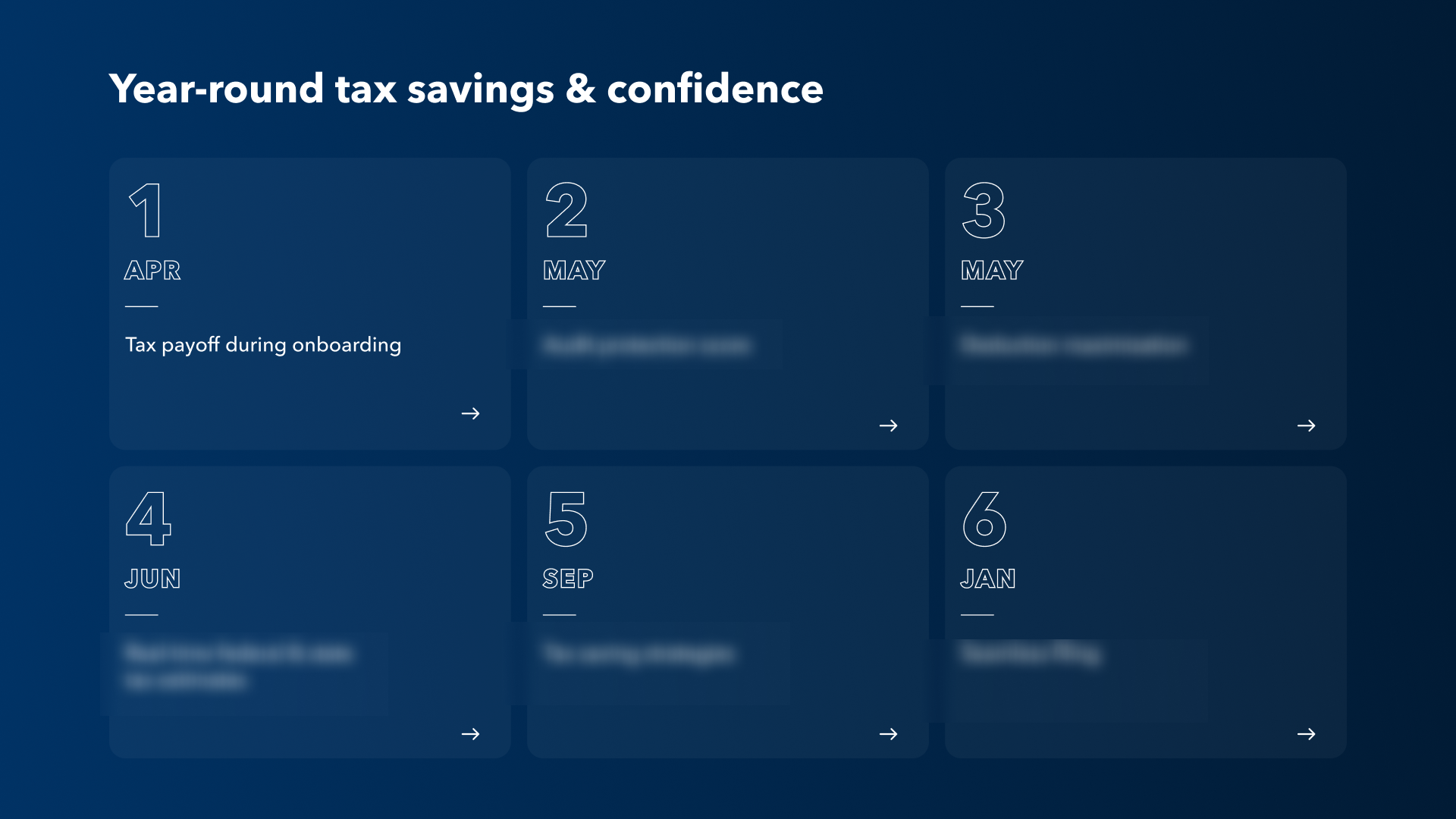
9 teams
aligned across tax, accounting, product, engineering and shared-experiences.
<1d
from blank wall to first interactive prototypes in front of customers.
Tax was the elephant in the room. QuickBooks is the dominant B2B accounting platform in the US, and the whole reason owners use it is year-end tax. But, even for DIY filers without CPA, QuickBooks only focuses on bookkeeping. The ultimate job-to-be-done is mostly invisible in the product, leaving business owners with fear, uncertainty, and doubt.
2026 | 3 months Core team: 1 group product manager, 1 staff designer & myself Stakeholders across multiple teams: accounting, onboarding, shared experiences, engineering, product, marketing & data science
-
Designed & facilitated a two-day cross-functional sprint
-
Engaged stakeholders to craft a shared vision
-
Designed key experiences
-
Built AI-experiments to unlock collaboration
Steered an innovation sprint: design-led, customer-focused & AI-accelerated
Design took the lead
Based on the early success of the AI tax deduction maximizer, Design instigated the tax vision work. We brought in key partners (engineers, PMs, marketing, data science) for a two-day, mostly face-to-face sprint to drive ideas and alignment. I designed the sessions to mix perspectives and align on the key challenges.
The decision: live prototypes by the end of day one to accelerate learning
I pushed the program to have prototypes running by the end of the first day, so we could make ideas tangible, learn & iterate faster. The next day we tested the interactive prototypes with customers to validate or invalidate early assumptions. At the end of day two, key ideas were endorsed.
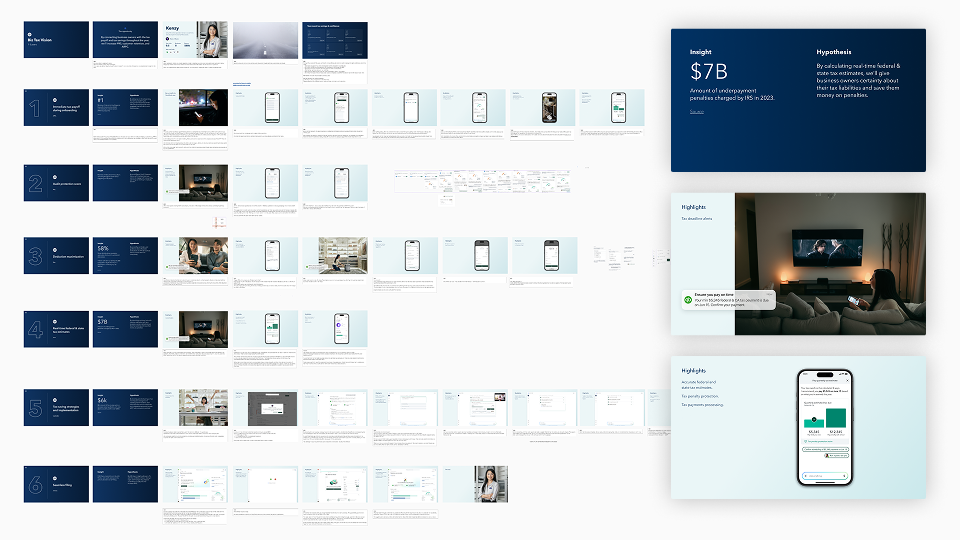
Shaping a shared 1-3 year vision teams could act on
From many ideas to a compelling story
Coming out of the workshop we had a lot of ideas and weak signals. My job was to turn that into something teams could act on. Partnering with another staff designer, I ran a highly iterative process: crafting a story around the tax year, distilling it to a few key ideas, and designing them simply.
The decision: engage broadly, early
I engaged broadly across QuickBooks design and product teams: to get feedback on the ideas, assess the gaps we needed to bridge, and avoid blind spots. The result: early buy-in to the vision.
Accelerating validation with AI-prototypes
-
Validating key customer assumptions to drive roadmap alignment
Some novel ideas hinged on leap-of-faith customer assumptions. Before partner teams could take our ideas into their roadmaps and test them quantitatively, we needed to test comprehension and appeal with customers.
-
The decision: using AI to iterate on-the-fly the experience with real data
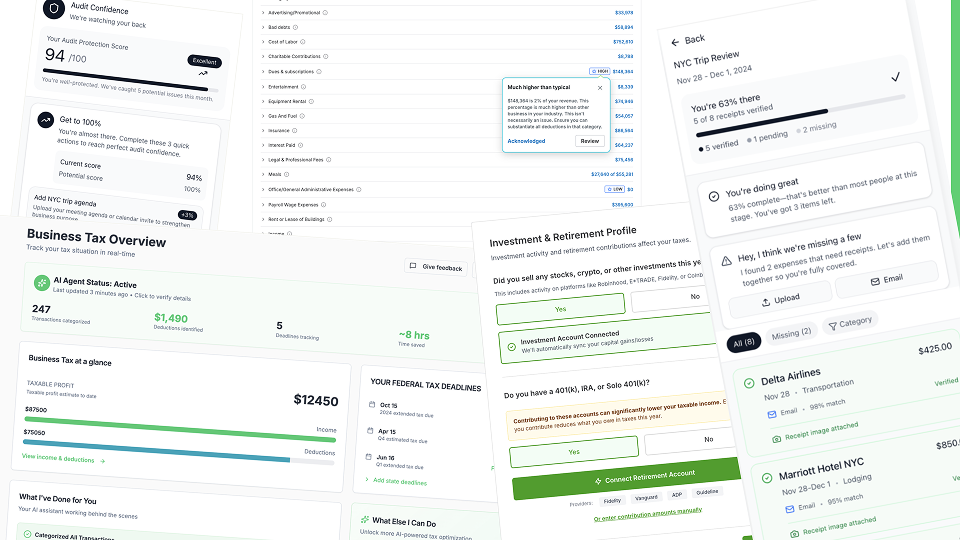
For example, to test a tax onboarding conversation, I built a live chat prototype in Builder.io (chosen because it pulls in our design components from figma with a copy-paste). Instead of spending a sprint configuring a real agent to run the onboarding conversation, I ran it as a Wizard of Oz: a facilitator typing the AI's responses in real time. Participants believed they were talking to a live AI. It helped us improve the conversation flow and interaction patterns and get authentic reactions to an experience that didn't exist. Other prototypes included links to Google Sheets, so we could show live-feeling tax calculations with no back end at all. After sharing the approach in a brown-bag session and on slack, other teams started leveraging it too.